

Running a law firm means protecting billable hours. But most teams lose time to intake follow-ups, scheduling, inbox overload, document organization, and status updates. A Filipino virtual assistant for Law Firms can take ownership of these repeatable tasks so your attorneys and paralegals stay focused on legal work, client outcomes, and deadlines.
What Is Considered a Large Law Firm ?
A “large” firm is not just about headcount. It is a firm where volume forces structure. Common signs include high inquiry flow, multiple attorneys or practice areas, constant document movement, strict deadlines, and more handoffs between staff. If your team relies on SOPs, templates, shared tools, and consistent follow-through, you are already operating like a large firm.
Why Large Law Firms Use Virtual Legal Assistant Services
Large firms use virtual legal assistants to reduce operational drag without expanding payroll. The main reasons are:
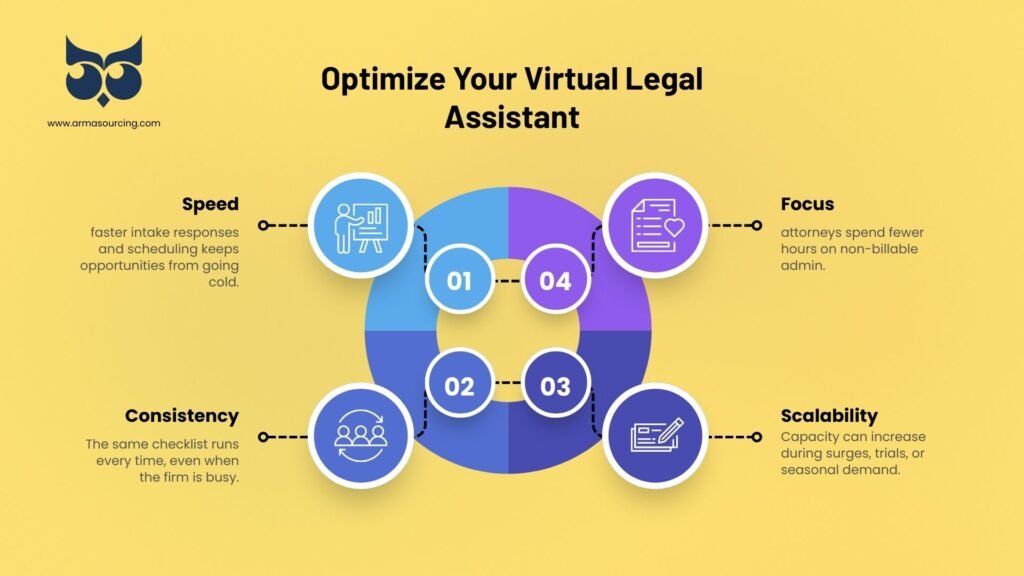
A key boundary to keep clear is that a virtual assistant supports administrative execution under your direction and does not provide legal advice.
What Our Legal Virtual Assistants Can Handle
A trained legal VA can support workflows that are process-based, template-driven, and easy to quality check:
Client intake and follow-up: gather details, send next steps, confirm documents, and schedule consultations.
Scheduling and reminders: manage calendars, confirmations, reschedules, and deadline reminders.
Inbox triage: sort, label, route, and respond to routine messages using your scripts.
CRM or matter updates: keep notes clean, update statuses, and tag properly for handoffs.
Document organization: file naming, folder structure, version control, and checklists.
Template-based drafting support: prepare letters or form packets using your templates for attorney review.
Billing support: invoice reminders and payment follow-ups based on your policy.
This is where most firms see immediate relief because these tasks happen every day and create bottlenecks when ignored.
Why Choose Virtual Over In-House
Hiring in-house can be the right long-term move, but it adds recruiting time, training load, benefits, and fixed overhead. Virtual support is often the better first step when you need faster deployment and flexible capacity.
For many firms, the real win is not just cost. It is speed to execution. A virtual assistant can be onboarded into a standardized process quickly, which helps stabilize intake and admin flow without waiting weeks to hire.
Streamline Operations Without Expanding Headcount
If your attorneys are doing intake follow-ups, rescheduling consults, chasing files, or cleaning CRM notes, you are spending premium time on low-leverage work. Virtual support creates a reliable “admin layer” that keeps the firm responsive and organized.
If you are actively evaluating support, this is the service page that matches this guide: Filipino Virtual Assistants for Law Firms.
How Our Virtual Legal Assistant Services Work
Discovery and task mapping
Matching and onboarding
Daily execution with accountability
Transparent Pricing
For law firms, “transparent” means simple monthly pricing, clear scope, and a support system behind the VA. The strongest setups also include replacement coverage and performance check-ins so you are not guessing whether the role is working.
Proven. Trusted. Reviewed.
For legal operations, trust comes from controls. If you want virtual support to work long term, insist on:
NDAs and confidentiality expectations from day one
least-privilege access to tools and files
documented SOPs and templates
a weekly summary of completed tasks, open loops, and turnaround times
This keeps quality high and prevents the role from turning into “random help.”
Your Guide To Common Questions and Solutions
Will a VA understand legal workflows?
How do we protect confidentiality?
What is the fastest way to see impact?
How do we avoid mistakes?
Trusted by Law Firms Nationwide
Virtual support works well for firms with distributed teams, multiple locations, or clients across time zones. With a clear process, your assistant can keep the operational engine running while your legal team focuses on the work that requires legal judgment.
