Contents
Last updated: July 2026. All figures below come from named primary sources (IBPAP, CCAP, Deloitte, PwC, Zendesk, salary databases). You are welcome to cite any statistic on this page; see the attribution note at the end.
The Philippines is the world’s contact center capital, and the numbers behind that title keep growing. This page collects the most important, most cited statistics on the Philippine contact center and BPO industry in one place: market size, employment, growth forecasts, cost comparisons, and the customer experience data that explains why companies outsource support in the first place.
Key statistics at a glance
- The Philippine IT-BPM industry earned about $40 billion in export revenue in 2025 and employed 1.9 million people (IBPAP).
- IBPAP forecasts $42 billion in revenue and 1.97 million full-time employees in 2026.
- The industry grew 5% in 2025, outpacing the 3% global average for the sector.
- The contact center segment alone generated $31.5 billion in 2024, up from $29.5 billion in 2023 (CCAP).
- The Philippines handles an estimated 16 to 18% of the world’s outsourced services (Everest Group, cited by CCAP).
- IT-BPM contributes more than 8% of Philippine GDP.
- The average US call center agent earns about $42,700 per year; the average Filipino agent earns about ₱267,000 (roughly $4,700). Fully loaded outsourced rates typically run $8 to $18 per hour.
- Companies that outsource support to the Philippines commonly report 50 to 70% savings on labor and operating costs.
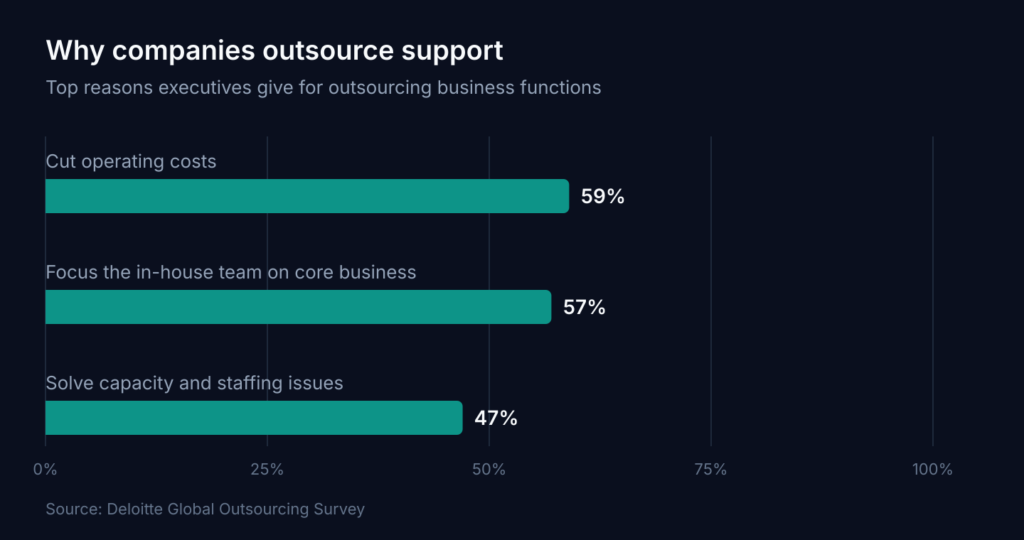
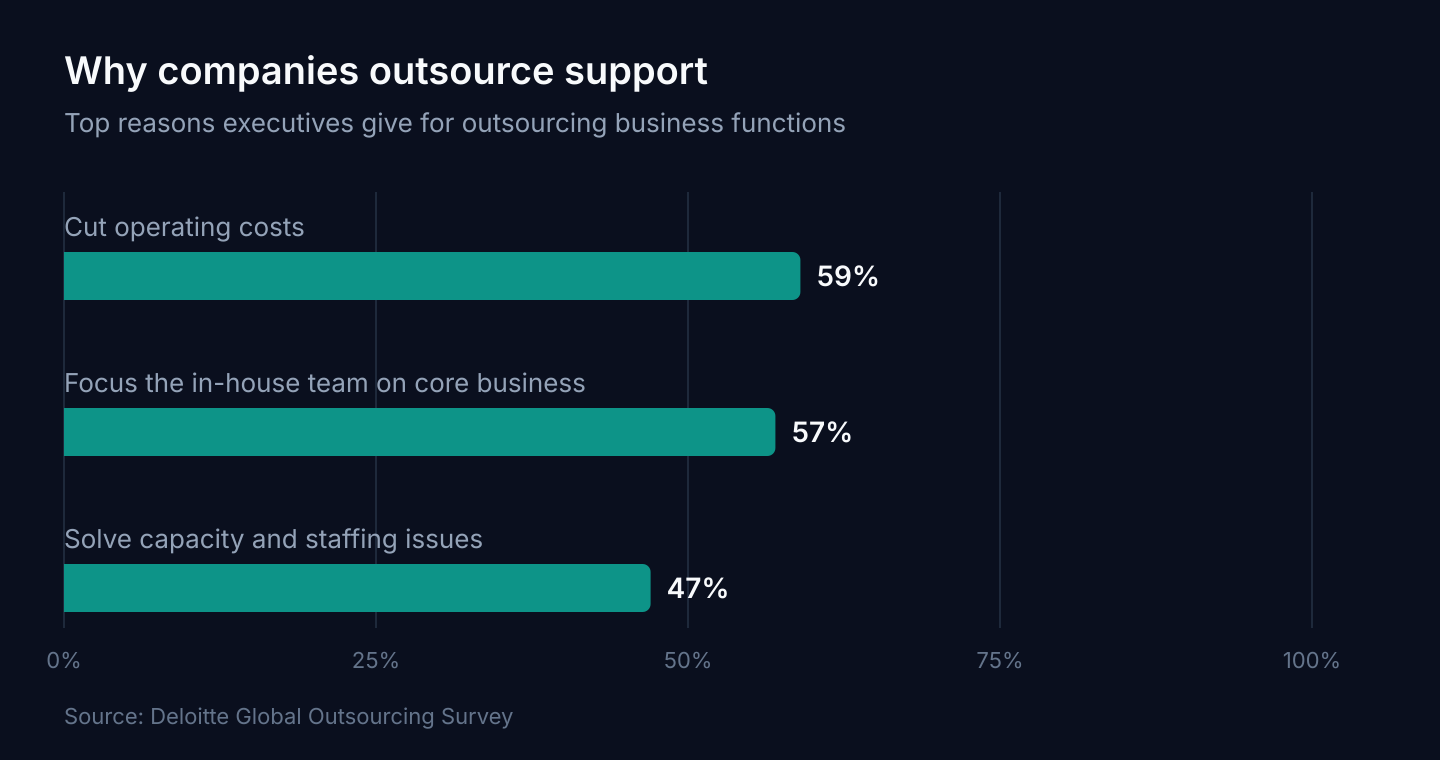
- 59% of companies outsource to cut costs, 57% to focus on core business, and 47% to solve capacity issues (Deloitte Global Outsourcing Survey).
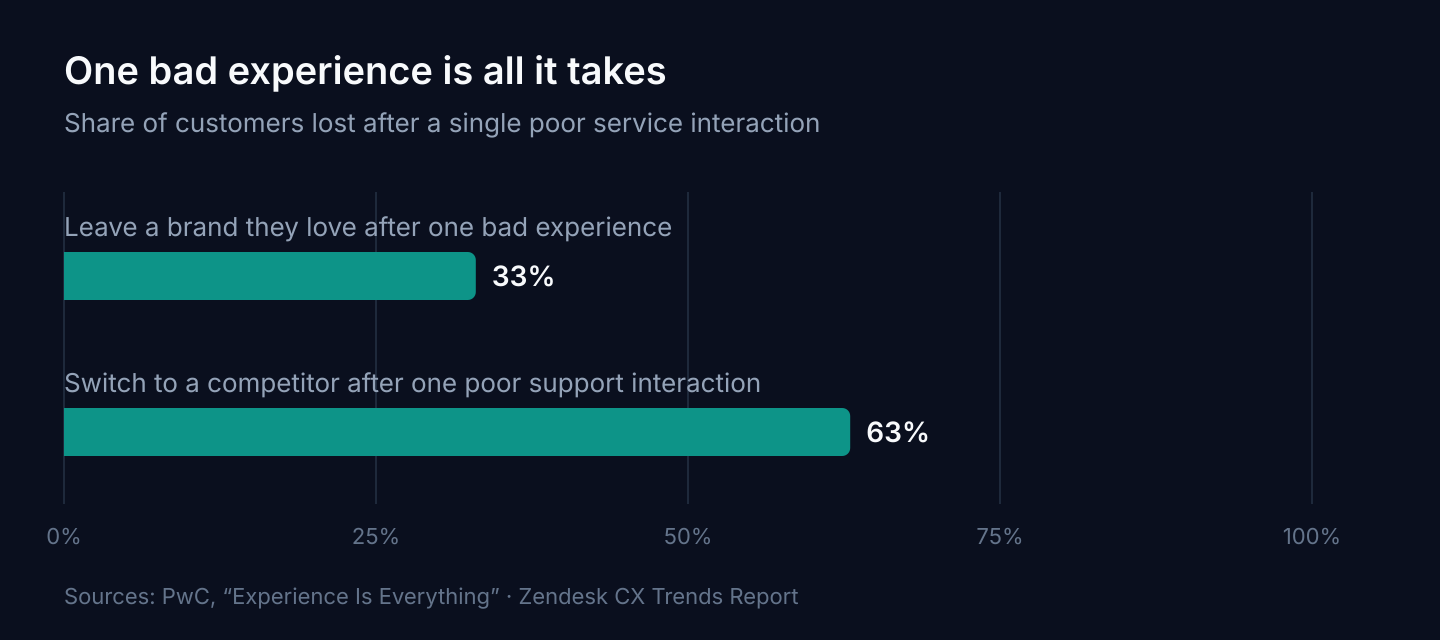
- 1 in 3 customers will leave a brand they love after a single bad experience (PwC), and 63% will switch to a competitor after one poor support interaction (Zendesk).
How big is the Philippine BPO industry?
According to the IT and Business Process Association of the Philippines (IBPAP), the industry closed 2025 with roughly $40 billion in export revenue and a workforce of 1.9 million full-time employees. That represented 5% revenue growth and 4% job growth in a year when the global industry averaged only 3% growth.
For 2026, IBPAP projects revenue of $42 billion and headcount of 1.97 million. The association’s Roadmap 2028 targets $59 billion in revenue and 2.5 million jobs by 2028. The sector already accounts for more than 8% of the country’s GDP, making it one of the two pillars of the Philippine economy alongside overseas remittances.
The contact center segment
Contact centers are the largest slice of Philippine outsourcing. The Contact Center Association of the Philippines (CCAP) reported that the segment earned $31.5 billion in 2024, up from $29.5 billion in 2023, and projects member revenues of $49 billion by 2028.
Analyst firm Everest Group estimates the Philippines captures 16 to 18% of the world’s outsourced services, ahead of every other delivery country for voice and customer experience work. The reasons cited are consistent across studies: strong English fluency, cultural affinity with North American customers, deep service culture, competitive costs, and government support for the industry.
What does a contact center agent cost: Philippines vs United States?
Salary databases put the average US call center agent at about $42,700 per year (roughly $21 per hour) before benefits, payroll taxes, equipment, software, and management overhead. The same databases put the average Filipino call center agent at about ₱267,000 per year, roughly $4,700.
Once you add provider fees, infrastructure, quality assurance, and team leadership, fully loaded outsourced rates in the Philippines typically land between $8 and $18 per hour, against an all-in cost that can exceed $70,000 per year for a single in-house US agent. Even after every markup, most companies see total savings of 50 to 70%. For a line-by-line breakdown, see our US vs Philippines staffing cost comparison.
Why companies outsource customer support
Cost is the headline reason, but it is not the only one. Deloitte’s Global Outsourcing Survey found that 59% of companies outsource to reduce operating costs, 57% to focus on their core business, and 47% to solve capacity problems.
The cost of bad support
The revenue case for professional support is just as strong as the cost case. PwC found that 1 in 3 customers (33%) will walk away from a brand they love after just one bad experience. Zendesk’s research puts the number even higher for support specifically: 63% of customers will switch to a competitor after a single poor support interaction.
The coverage gap: 40 hours vs 168 hours
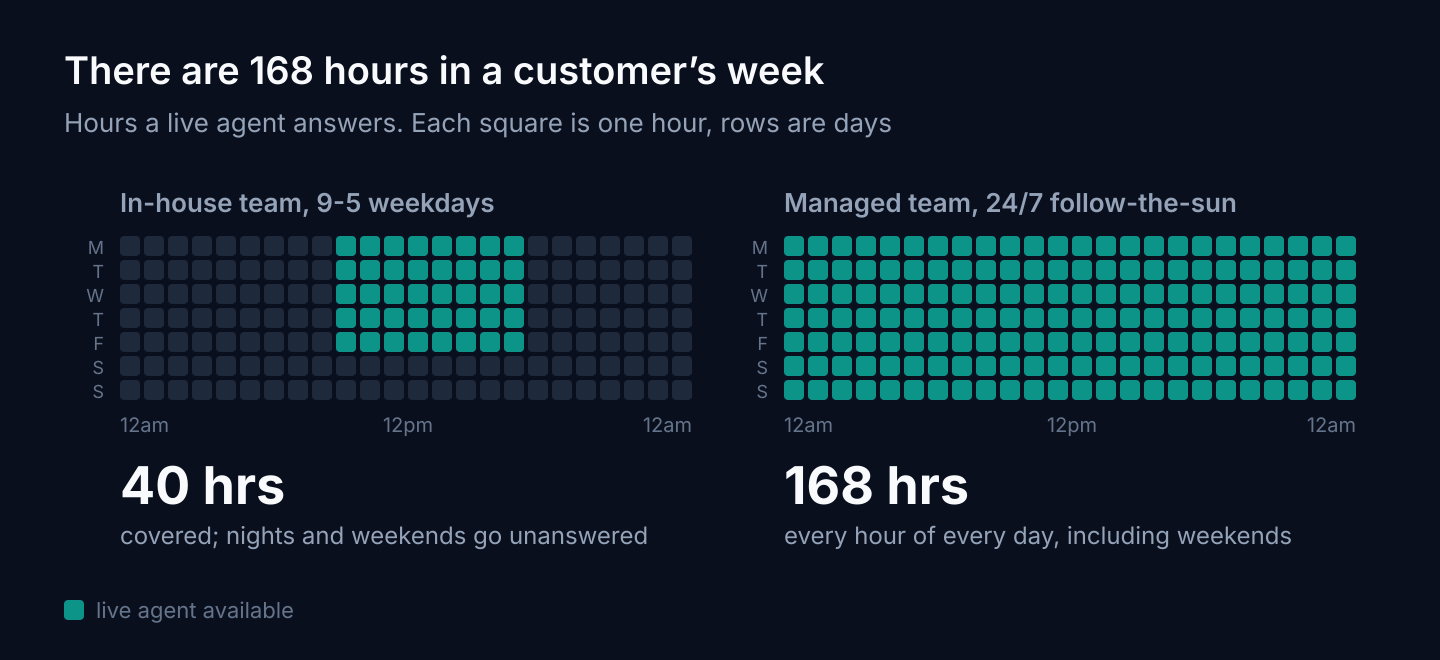
A standard in-house team working 9 to 5 on weekdays covers 40 of the 168 hours in a week, less than 24% of the time your customers can reach out. A managed 24/7 team covers all 168. That difference is where missed calls, abandoned carts, and overnight tickets live.
How to cite these statistics
You are welcome to use any statistic or chart on this page in your own articles, presentations, or research. Please attribute it with a link to this page, for example: Source: Armasourcing, Philippine Contact Center Statistics. If you need a stat we have not covered, or the data behind a chart, email us and we will share it.
Sources
- IBPAP 2025 results and 2026 forecast (Philippine Daily Inquirer)
- CCAP: Philippine contact center industry earns $31.5B in 2024 (Outsource Accelerator)
- CCAP / Everest Group: Philippines’ share of global outsourced services
- Deloitte Global Outsourcing Survey
- PwC, Future of Customer Experience
- Zendesk customer service statistics
- SalaryExpert: call center agent salary, Philippines
- ERI: call center agent salary, United States
About Armasourcing
Armasourcing builds managed Filipino contact center teams from 10 seats up, with dedicated team leads, daily QA monitoring, and compliance-ready agents for regulated industries. This statistics page is maintained by our research team and updated as new industry data is released.
Need a VA who already understands your industry?
We don’t place generalists. Our VAs are matched and trained for the specific workflows of your sector.
See industry VAs →